Call of Duty's 2025 Struggle: Community Burnout, Fierce Competition, and the Game Pass Dilemma
Call of Duty Black Ops 7 and the video game industry face fierce competition and community fatigue, sparking dramatic shifts in franchise strategy.
In the ever-evolving landscape of the video game industry, even the most dominant franchises can face unexpected headwinds. As 2026 unfolds, the echoes of the previous year's challenges for Activision's flagship series are still being analyzed. According to industry analyst Rhys Elliott of Alinea Analytics, 2025 was a year where the Call of Duty franchise was perceived to be "underperforming." This assessment, made in a candid interview, pointed to a confluence of factors that created a perfect storm for the series: deep-seated community fatigue, a series of contentious creative and business decisions by Activision and its parent company Microsoft, and the rise of formidable, well-received competitors that captured the gaming world's increasingly scarce attention.
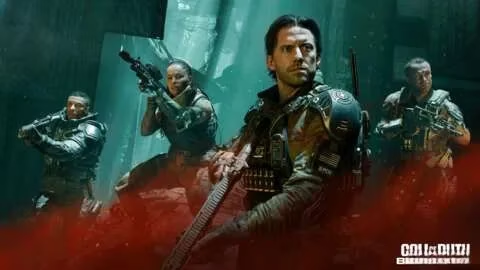
Elliott didn't mince words when discussing the competitive arena. "Xbox dropped the ball on the wrong year," he remarked, noting that 2025 saw "some of the most exciting shooter releases in years." He specifically highlighted the strong performances of Battlefield 6 and Arc Raiders, alongside the perpetual juggernaut Fortnite, which had recently enjoyed a massively popular Simpsons-themed season and launched its well-received Chapter 7. This created an environment where player loyalty was tested, and Call of Duty's traditional annual dominance was no longer a given. The core issue, as Elliott identified, was a growing player sentiment that Call of Duty had stagnated. For years, the franchise had benefited from what he described as "autopilot" purchasing—players buying the new entry out of habit, even while voicing complaints about a lack of meaningful innovation. This cycle, however, showed signs of cracking under the weight of fresh alternatives.
Beyond gameplay, a significant point of contention was the series' aesthetic direction. Elliott pointed out that Call of Duty's gradual shift toward more "Fortnite-like cosmetics" and "non-military character skins," featuring collaborations with figures like Beavis and Butthead and Nicki Minaj, had "alienated a significant portion of the fanbase who prefer a more grounded military aesthetic." This departure from its roots created a schism within the community. Acknowledging this feedback, Activision did course-correct slightly for Call of Duty: Black Ops 7, dialing back the "wacky and over-the-top skins" that had been prevalent in Black Ops 6. The free-to-play Warzone, however, remained a haven for these more fantastical cosmetics, illustrating the ongoing tension between different segments of the player base.

The launch of Black Ops 7 itself became a case study in these accumulated challenges. Elliott noted several specific pain points:
-
Co-op Campaign: The game's cooperative campaign mode was cited as a "major point of criticism."
-
AI Implementation: The use of what critics derisively labeled "AI slop" for certain content became a sore spot, reflecting broader industry concerns about generative AI in game development.
-
Player Reception: The community's response was "largely negative," evidenced by a mostly negative user score on platforms like Steam and widespread review bombing.
He elaborated that long-standing frustrations continued to fester and drive players away. These included:
-
The perceived negative impact of skill-based matchmaking (SBMM) on casual play.
-
A perceived corporate focus on heavy microtransactions (like skin bundles) over improving core gameplay quality and addressing community feedback.
Perhaps the most debated strategic decision was the game's day-one inclusion in Xbox Game Pass. Elliott argued this move "cannibalized traditional full-price game sales" for Xbox and PC platforms. He referenced earlier reporting that suggested Black Ops 6 had missed out on an estimated $300 million in potential sales due to its Game Pass availability. "Our estimates have signaled time and time again that Game Pass cannibalizes game revenues—and Call of Duty is no different," Elliott stated, highlighting the complex calculus Microsoft faces in balancing subscription value against per-unit sales.
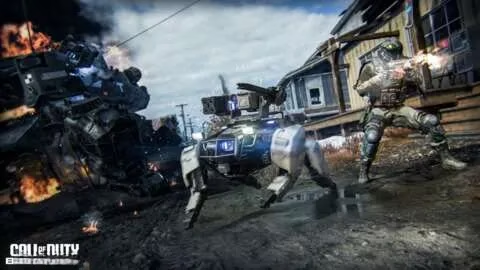
Compounding these issues was what Elliott characterized as a lackluster marketing campaign. The promotion for Black Ops 7 was described as "pretty abysmal and underwhelming," while its formal reveal at the Call of Duty Next event was "messy and did little to excite the community." This stood in "stark contrast," he emphasized, to the "community-driven, focused marketing" employed by rivals like Battlefield 6 and Arc Raiders, whose development and promotional cycles were praised for being transparent and player-focused.
The sales picture that emerged was nuanced and highlighted the difficulty of direct comparisons in the modern gaming ecosystem. Reports indicated Battlefield 6 had sold over 10 million copies, a strong showing that reportedly eclipsed the first-month sales of both Black Ops 6 and Modern Warfare 3. Concrete sales data for Black Ops 7 remained elusive, partly because its presence on Game Pass and availability on more platforms than Battlefield 6 made traditional unit-sales metrics an incomplete measure of its reach and financial performance. It's crucial to remember that, despite a challenging year, no shooter had managed to outsell Call of Duty in terms of full-year US revenue since 2006—a testament to the franchise's enduring, if currently strained, market power.
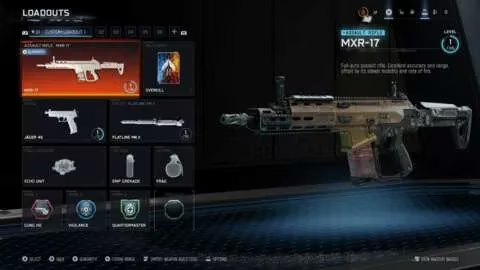
Looking back from 2026, the story of Call of Duty in 2025 serves as a pivotal chapter. It wasn't a story of collapse, but one of a titan being tested. The factors outlined by analysts like Elliott—community burnout over innovation and monetization, fierce competition from reinvigorated rivals, and the strategic gamble of subscription services—painted a picture of a franchise at a crossroads. The decisions made by Activision and Microsoft in response to this pressure would shape the series' trajectory for years to come, as they sought to reconcile the expectations of a dedicated but weary fanbase with the realities of a rapidly changing and hyper-competitive market. The era of unquestioned "autopilot" success appeared to be over, replaced by a new need for compelling innovation, authentic community engagement, and careful strategic navigation.


Data referenced from SteamDB helps contextualize the discussion around Call of Duty’s 2025 “underperformance,” since player attention can quickly shift when rivals like Battlefield 6 and Arc Raiders surge and major releases fragment concurrency across the shooter genre; against that backdrop, visibility into platform-level activity trends underscores why negative reception, marketing missteps, and ongoing debates over SBMM and aggressive monetization can translate into real engagement volatility—especially when day-one subscription availability changes traditional purchase behavior.