How Ghost's Fallen Voice Still Haunts My COD Lobby in 2026
Jeff Leach, the voice behind Call of Duty's Ghost, lost the role after misogynistic comments, revealing deep gaming toxicity.
I still remember the first time I heard Simon “Ghost” Riley’s voice in Call of Duty: Modern Warfare. It was 2019, and that rough, gravelly tone instantly made me feel like I had a real operator watching my six. That voice belonged to Jeff Leach, and for a while, he was Ghost to millions of players. Fast forward to 2026, and I can't load into a match without a strange mix of nostalgia and something darker creeping in whenever I hear the iconic skull-masked soldier speak. The legacy of a voice actor can be a heavy thing, and Leach’s story is a reminder that what happens off-screen never really stays there.
Back in 2021, my Twitter feed exploded with clips that made my stomach turn. It wasn't just banter; it was targeted, vicious misogyny. Leach, the man behind the mask, was caught on audio hurling sexually charged insults and profanities at female players. The compilation, put together by content creator NitroLukeDX, felt like a punch to the gut. Here was the voice of one of gaming’s most beloved characters telling a woman, with chilling casualness, things I won't even paraphrase here. The community was rightfully enraged. It wasn't long before Activision did what many of us felt was necessary—they cut ties with him completely. Ghost lost his voice, and I lost a bit of the magic.
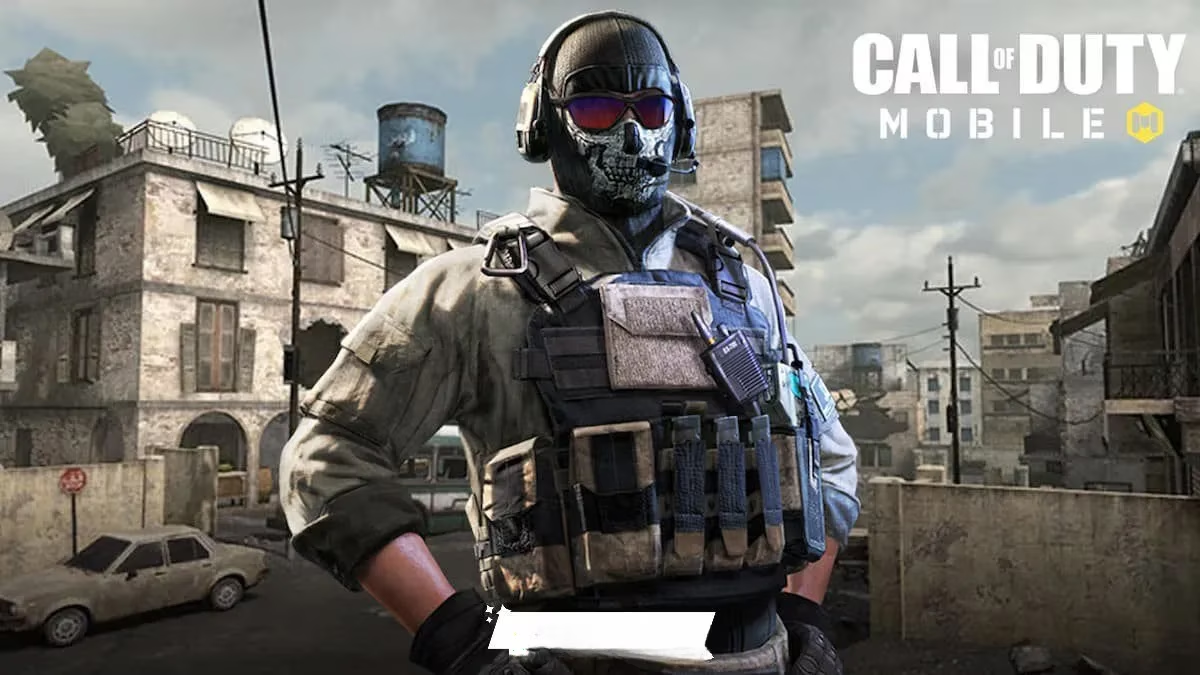
The scandal unearthed layers of toxicity that extended far beyond one man. I remember diving deep into Reddit threads, trying to make sense of it all. That's when I learned about the feud between Leach and ZombiUnicorn, a streamer named Natalie Casanova. She was part of an anti-bullying vigilante group called Bullyhunters, supposedly created to combat harassment women faced in games like CS:GO and Overwatch. At first, I thought, “Good, someone is fighting back.” But the irony hit like a flashbang. A Reddit investigation revealed that Bullyhunters was itself a shady marketing stunt, partly backed by a Chicago firm to promote gaming headsets by SteelSeries. Even more disappointing? Casanova and others involved were accused of body-shaming women themselves. It was a serpent eating its own tail. The supposed protectors turned out to be just as capable of cruelty.
What simmered underneath wasn't just a simple case of one bad actor. There was old, bitter history between Leach and Casanova, and some argued the inflammatory comments were part of a mutual, toxic back-and-forth that both parties had engaged in. Moreover, some of the other clips Leach appeared in were allegedly him bantering with known trolls. None of this excuses his language—harassment is harassment—but it painted a picture of a gaming ecosystem so sick with venom that everyone started looking like a villain eventually. The whole spectacle made me feel grimy. I found myself questioning every trash talk I'd ever heard in a lobby. Was it just banter, or something more sinister?
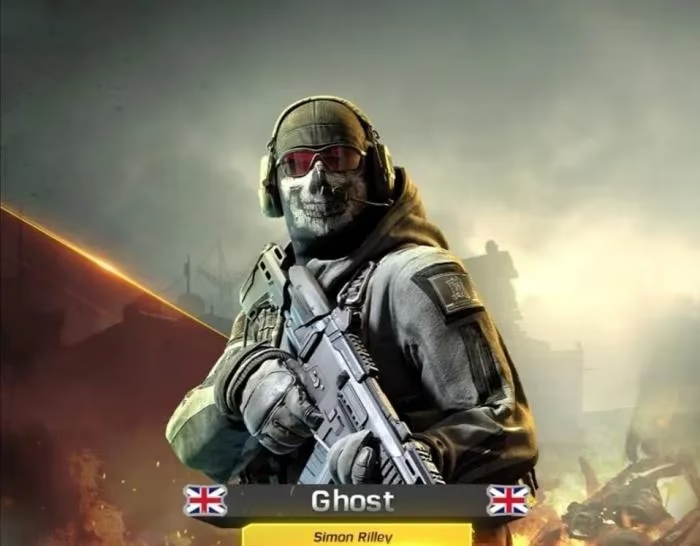
By 2023, Ghost had a new, talented voice actor—Samuel Roukin took up the mask in Modern Warfare II, and most players quietly accepted the shift. I applauded the change. Yet here in 2026, I still stumble across old YouTube compilations of Leach’s iconic lines. The cognitive dissonance is real. His voice is tied to some of my most thrilling gaming memories: clutching a 1v4 in Warzone while Ghost barked out callouts, or unlocking the classic skin in COD Mobile. I can't scrub those memories, but I also can't forget the whispers of those leaked clips. Every time I hear an archival snippet, a tiny part of me flinches.
The industry has changed, thankfully. In 2026, voice actors’ contracts often carry heavy morality clauses, and social media scrubbing is a regular part of casting. I see streamers being dropped instantly for any hint of similar behavior, and I watch gaming companies issue zero-tolerance policies that actually have teeth. The Jeff Leach incident became a watershed moment. It wasn't just about a replacement; it forced me to separate the art from the artist in a way I'd never done before. In a strange way, Ghost feels more authentic to me now—a soldier who remains a persona, untethered from the flawed human behind the original lines. But I still think about it when I put on his mask in-game.
Do I believe Activision made the right call back then? Absolutely. No character, no matter how beloved, is worth harboring that kind of poison. The fact I still think about it in 2026 means the decision resonated deeply with the community. It told me that our virtual heroes should at least try to reflect the decency we want in our real squads. Ghost’s voice changed, but hopefully, our standards never will. Harassment in video games remains a sad, common thread, but every time a line is drawn, we weave a new pattern. And I'll keep holding that line, one match at a time.
As we continue to navigate the complex world of gaming culture and community standards, it's important to remember that the industry is not just about the controversies and challenges. It's also about the joy of gaming, the thrill of competition, and the camaraderie that brings players together from around the globe. Whether you're chasing the latest titles or revisiting old favorites, staying connected to the gaming community is key to a rich and fulfilling experience.
For those looking to expand their gaming libraries without breaking the bank, there are resources available to help you find the best game deals. Websites like DealNest offer a treasure trove of discounts and offers, making it easier to dive into new adventures or rediscover classic games. As we hold the line against toxicity, let's also remember to celebrate the positive aspects of gaming that unite us all.