My Call of Duty: Mobile DMZ Recon Guide for 2026
Call of Duty: Mobile DMZ Recon mode blends PvP and PvE action, offering intense survival challenges on Serpent Island.
When Call of Duty: Mobile dropped the DMZ Recon mode back in December 2025, I wasn't sure what to expect. Over a year later, here I am in 2026, still loading into Serpent Island almost every evening. The high‑stakes mixture of PvP and PvE, the shrinking radiation zones, and the tense push for extraction have turned this mode into something I can’t put down. After countless successful exfils (and just as many frustrating wipes), I’ve learned what works, what gets you killed, and how to walk away with the loot you actually need. So grab your gear – I'm sharing my personal DMZ Recon survival guide.
Getting to Know Serpent Island and Building 21
Every match starts with a squad of up to three operators dropping into either the outdoor Serpent Island or the claustrophobic interior of Building 21. I quickly realised that the maps dictate your entire playstyle. Serpent Island is sprawling, full of rocky outcrops, abandoned structures, and long sightlines that snipers love. Whenever I land there, I spend the first minute just checking my surroundings with my scope – spotting an enemy squad early can mean the difference between a clean rotation and an early trip to the menu. The island also houses plenty of contracts, high‑value targets, and the two infamous bosses. Understanding its flow is crucial, and I still discover new flanking routes even after dozens of raids.

Building 21, on the other hand, is a whole different animal. Spread across three indoor floors with a garage, offices, restaurants, and a living area, it compresses the action into frantic, close‑quarters brawls. Here, my trusty assault rifle often gets swapped for an SMG, and I double‑check my corners like a paranoid rookie. The tighter layout means PvP engagements happen almost instantly, and the artificial lighting plays tricks on your eyes. If you're heading into Building 21, bring a loadout optimised for fast ADS and quick movement – I learned that lesson the hard way after losing a fully kitted Operator to someone crouched behind a counter.
Choosing Your Talent Tree: Scavenger, Assaulter, or Medical
Before every drop, I spend a good minute in the pre‑game loadout screen. Deciding which Talent Tree to invest in shapes my entire approach. There are three: Scavenger, Assaulter, and Medical. I’ve dabbled in all of them, and each one genuinely alters how you interact with the world.
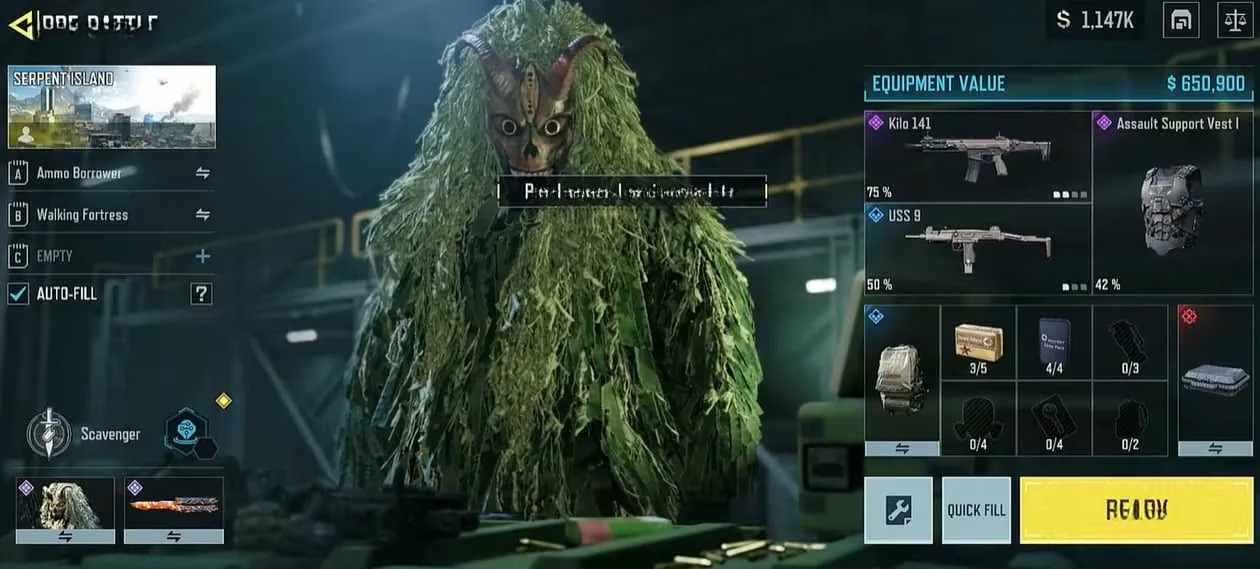
Scavenger is my go‑to when I’m running solo. Its entire identity revolves around intel. The passive perks let you see enemy footsteps and even hide your armour tier when you get hit, which confuses enemy callouts. The active skill fires a probe dart that scans a small area and pings enemies on your mini‑map – invaluable for checking a building before you push. I’ve escaped countless ambushes simply by knowing an opponent was holding a corner.
Assaulter is for the days I feel aggressive. The talent tree sharpens your gun‑handling and movement speed, but the real gem is the active skill: it rewinds your position by a few seconds. Picture this – you accidentally walk into a three‑man squad while looting, smash the skill, and suddenly you’re back outside with your heart pounding. I’ve used it offensively too, baiting enemies around a corner and then rewinding to flank.
Medical is my squad’s safety net. The active ability drops a dense smoke bomb that provides cover for revives or a sudden retreat. Pair this with a coordinated team, and you can stabilise even the messiest firefights. If you’re playing with friends who prefer to push, always have one person spec into Medical – losing a fully‑kitted Operator because no one could reach you in time is gut‑wrenching.
Boss Fights: Kui Ji and The Tank
Both Serpent Island bosses demand respect. Kui Ji is the kind of enemy that makes me breathe shallow. He’s hyper‑aggressive and can perform a finishing move that removes you from the game instantly if you get too close. My rule: never let him within ten metres. I circle his spawn area and whittle him down from a distance with armour‑piercing rounds. Even after he’s down, the danger isn’t over – you still have to reach an exfil, and other squads often rush the gunfire noise.
The Tank is a rolling fortress. Heavy armour, a main cannon that deletes your plates, and enough health to make you question your ammo reserves. I once emptied three full magazines into it while my teammates threw every explosive they had. The key is patience: maintain distance, use cover, and coordinate your reloads. If you run out of ammunition, you become a very soft target. After defeating The Tank, the loot is often worth the risk, but make sure you have a clear path to an extraction point before engaging.
Extraction Points: Your Ticket Out
I’ve lost count of how many times I died with a backpack full of reactive camo progress simply because I didn’t plan my exfil. There are several extraction types, and understanding them is survival 101. Normal Exfils appear on your map but are often contested. Random Exfils pop up in unexpected locations, which can be a blessing if you’re being hunted. Payment Exfils require a keycard or cash, Boat and Train Exfils add a moving element, and Elevator Exfils in Building 21 create claustrophobic showdowns.
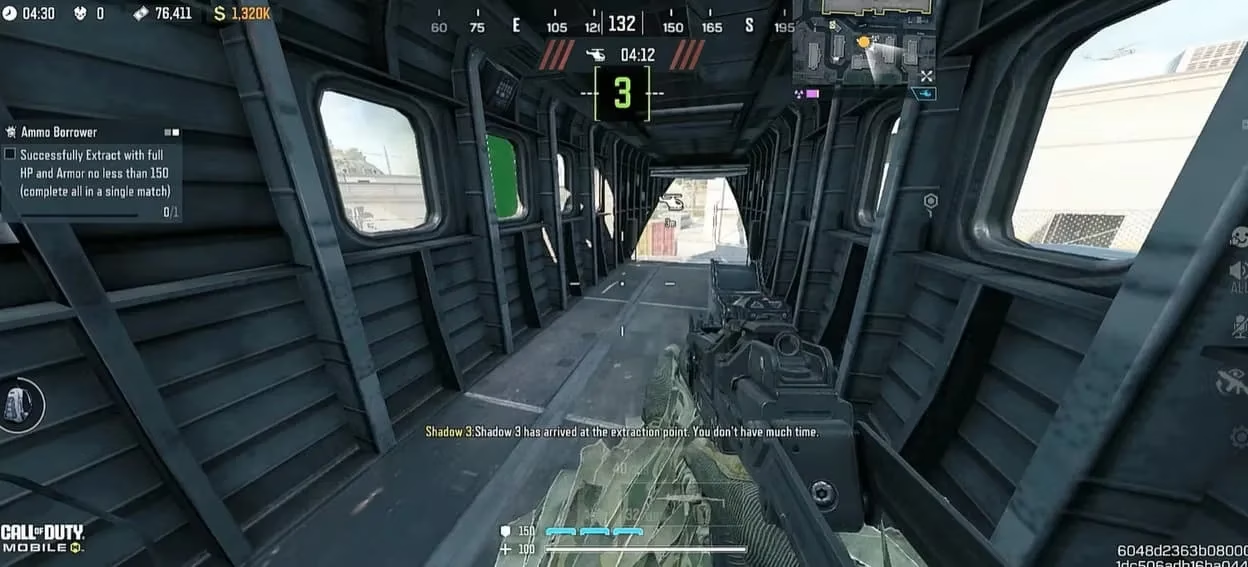
My advice? Always have a backup exfil in mind. Once the radiation starts eating the map, the obvious spots turn into kill zones. I’ve hugged the edge of the zone, crouch‑walked to a random exfil, and slipped away without firing a single bullet. Sometimes survival is about being unseen, not being the last one standing.
Looting, Black Market, and Survival Economy
You start every DMZ Recon mission with barebones gear, and the only way up is through looting. Safes, vaults, and high‑value dead drops are my first priority. Cash is king because the Black Market lets you buy better weapons, armour plates, and ammo mid‑mission. I’ve had raids where I found a locked safe early, looted a legendary weapon, and snowballed through the lobby. Other times, I scraped together pocket change to afford a single armour plate that saved my life.
Don’t overlook contracts either. They reward cash and intel, and while they broadcast your approximate location, completing a few can finance your entire raid. I like picking up a Scavenger contract, grabbing the item, and then immediately moving to a different sector before the shooting starts. The economy forces you to make constant judgement calls: do you gamble on a high‑reward safe, or extract now with what you have? That tension keeps every match fresh.
Progression and Reactive Camos
The penalty for dying is brutal – you lose everything except what’s in your safe slot. That pressure makes every decision weightier. However, the mission structure offers multiple avenues to grow. Faction Missions, Weekly Missions, and Achievement Missions push you towards specific playstyles, and completing them unlocks cosmetic rewards that genuinely feel earned. My personal favourite are the Reactive Camos. These high‑value, dynamic weapon skins adapt to your performance, and they can be used across all Call of Duty Mobile modes. Seeing your camo evolve after a successful extraction chain is incredibly satisfying.
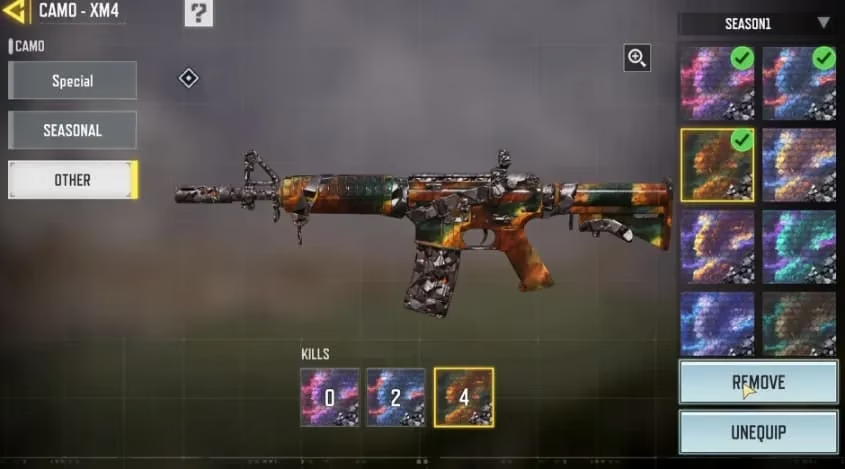
Grinding for those camos taught me to play smarter, not harder. I started prioritising survival over kills, and my extraction rate climbed. The progression treadmill is steep, but every step feels impactful.
Final Advice
If I could go back to my first week in DMZ Recon, I’d tell myself three things: map knowledge is your shield, communication wins fights, and greed gets you killed. Use the Quick Fill option when you’re short on time – a pre‑made loadout and a random squad can still produce an amazing raid. Pay attention to the sound of footsteps, the distant crack of sniper fire, and the crackle of radiation spreading. And don’t be afraid to emote at an enemy squad; I’ve nodded at strangers and formed temporary truces that let both of us extract alive. After a year of playing, COD Mobile DMZ Recon remains my favourite mode – I hope this guide helps you feel just as hooked.