The Enduring Disconnect: Call of Duty Mobile's Ban in Iran
Call of Duty Mobile's sudden Iran ban, driven by U.S. sanctions, left millions locked out of their accounts and searching for VPN workarounds.
It was a typical spring afternoon in 2021 when millions of Iranian gamers suddenly found themselves staring at an unfamiliar message. Instead of dropping into the familiar fields of Isolated or the close-quarters chaos of Nuketown, they were greeted by a cold, simple line: “Unfortunately, we are not yet ready to release the game in your area.” Just like that, Call of Duty Mobile had vanished for players in Iran.
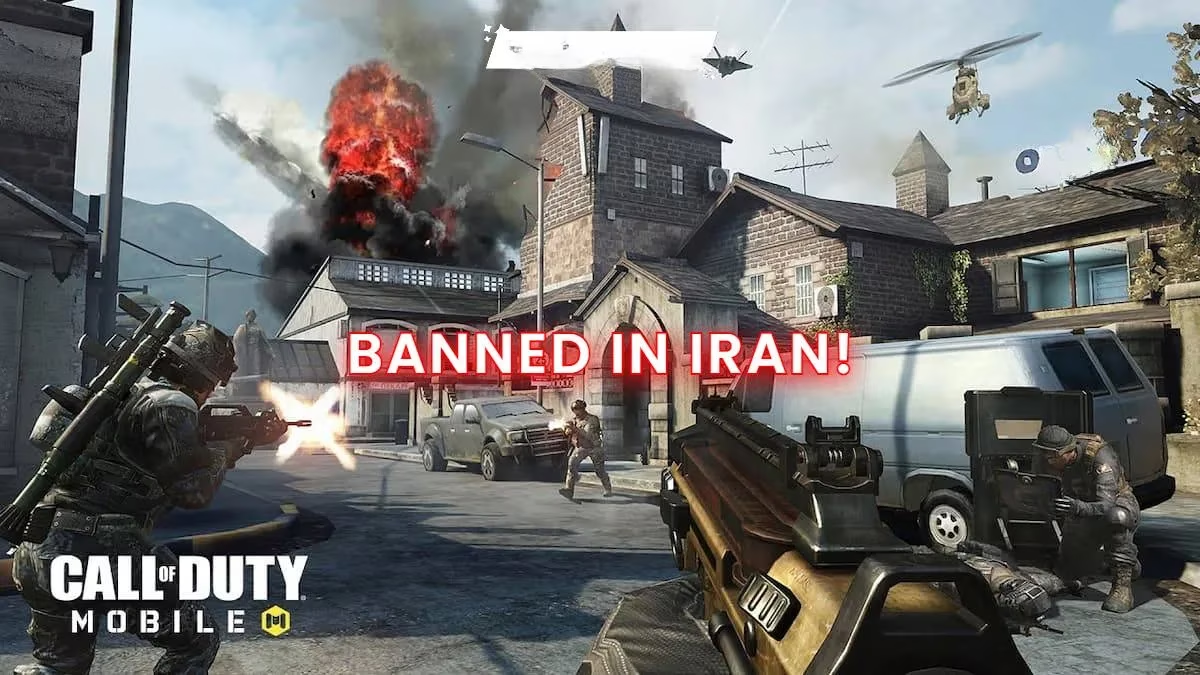
The removal came without warning—no official statement from Activision, no advance notice from the Iranian government. One day players were grinding their Battle Passes and climbing the ranked ladder, and the next they were completely cut off. The shock was immense, especially for those who had built streaming careers, YouTube channels, and tight-knit communities around the game. For many, it wasn't just a pastime; it was a part of their identity and livelihood.
So, what exactly led to this sudden blackout? Neither Activision nor Iranian authorities have ever provided a direct explanation, but experts and industry insiders point to one clear culprit: international sanctions. The United States has long imposed tough economic sanctions on Iran, prohibiting American companies—and, in many cases, foreign firms that wish to do business with the U.S.—from engaging in transactions with the country. Activision, as a U.S.-based publisher, would have been bound by these restrictions. The same legal net had already caught other beloved games. League of Legends was blocked, and so were Clash of Clans and Clash Royale. Call of Duty Mobile was simply the latest—and one of the most painful—casualties.
Gaming bans tied to geopolitical tensions are nothing new. China has famously restricted titles deemed too violent or gory, while India in 2020 banned PUBG Mobile and a slew of other Chinese-owned apps amid border disputes. Yet the Iranian ban on CoD Mobile hit differently because of the sheer scale of the affected player base and the suddenness of the action. Social media erupted with frustration. Players shared screenshots of the notice, and hashtags calling for the game’s return quickly trended. An influential tweet by an Iranian gamer, which showed the ban message, racked up thousands of retweets overnight, amplifying the community’s despair.
The practical fallout was severe. Gamers who had poured hundreds of dollars into weapon skins, lucky draws, and seasonal passes found their investments completely inaccessible. Content creators saw their audiences evaporate overnight. Esports hopefuls who dreamed of representing their country in regional tournaments were left without a platform. And, perhaps most disheartening, there seemed to be no safe way back in.
Ever resourceful, some players turned to VPN services as a workaround. After all, a VPN could make it appear as though they were connecting from a permitted region. But Activision’s terms of service took an iron-fisted approach: using a VPN to bypass regional restrictions could result in a 10-year ban. That’s a decade locked out of an account, a punishment severe enough to deter all but the most reckless. Knowing that a technical misstep could erase years of progress—along with every purchased cosmetic—most players chose not to risk it. The community was effectively trapped, with no official recourse.
As the months turned into years, hope flickered but never ignited. In 2023, a few optimistic rumors suggested that Activision might explore a licensing deal with a third-party publisher to legally route the game into Iran, similar to how some media companies operate in sanctioned territories. Others speculated that the loosening of certain sanctions under diplomatic negotiations could reopen the door. Yet here we are, in 2026, and the situation remains unchanged. Call of Duty Mobile is still geo-blocked for Iranian IP addresses. The ban message, or a close variant of it, still greets anyone attempting to log in from the country.
The long-term cultural impact cannot be overstated. Mobile esports in Iran, which had been on a promising upward trajectory before the ban, was effectively gutted. Talented players who could have competed on the global stage redirected their energy to other titles—sometimes regional clones, sometimes console games that require far more expensive hardware. The ban also taught a harsh lesson about the fragility of digital ownership when politics intervene. An entire generation of Iranian gamers learned that the pixels they loved could be taken away by forces far beyond their control.
Activision, for its part, has remained almost entirely silent on the matter over the past five years. The company did not respond to early press inquiries and has never issued a dedicated statement addressing Iranian players. Some community advocates have tried to push for a “virtual exception” that would allow restricted countries to access free-to-play games, arguing that in-game purchases could still be blocked to comply with sanctions. But these campaigns have failed to gain traction with either the publisher or U.S. regulatory bodies.
So, what can Iranian CoD Mobile fans do in 2026? The honest answer is: very little. The safest path remains waiting and hoping for geopolitical shifts. A few underground Discord servers try to coordinate test access whenever international tensions ebb, but these moments are fleeting and unreliable. The VPN route, with its 10-year-ban threat, is a gamble few are willing to take. Even those who try often find that sophisticated anti-fraud systems at Activision now detect and block most commercial VPN endpoints automatically. The cat-and-mouse game has largely been won by the publisher.
What does the future hold? Optimists note that the gaming industry is increasingly globalized, and that companies dislike leaving revenue on the table. If sanctions regimes shift—a big if—a market of millions of eager players could be reopened to Western publishers. Realists, however, point to the enduring nature of U.S.-Iran tensions and the complexity of sanctions law. For the foreseeable future, the ban is likely to persist. In the meantime, the Iranian gaming community has learned to cherish the memories of those frantic battle royale matches and to support one another through the shared loss. The hope, however faint, is that one day the message will change from “not yet ready” to “Welcome back.” Until then, Iranian players will be forced to sit on the sidelines, watching from afar as the Call of Duty universe continues to evolve without them.
As the global gaming landscape continues to evolve, players often find themselves navigating challenges that extend beyond gameplay itself. From geo-blocks to rising costs of gaming hardware and software, staying ahead in the gaming world requires resourcefulness. For those looking to make the most out of their gaming budget, tools like this price tracking tool can help identify deals and discounts on gaming accessories, consoles, and more. Such resources are invaluable in ensuring gamers can access the best products without overspending.
While geopolitical barriers remain a formidable obstacle for Iranian gamers, the broader community continues to find ways to adapt and thrive. Whether it's exploring alternative titles, participating in regional tournaments, or simply upgrading their setups at better prices, resources like DealNest offer a practical edge. These small victories remind us that while some restrictions may linger, the gaming spirit remains resilient.